Kathy’s maize field: disappointment and perseverance
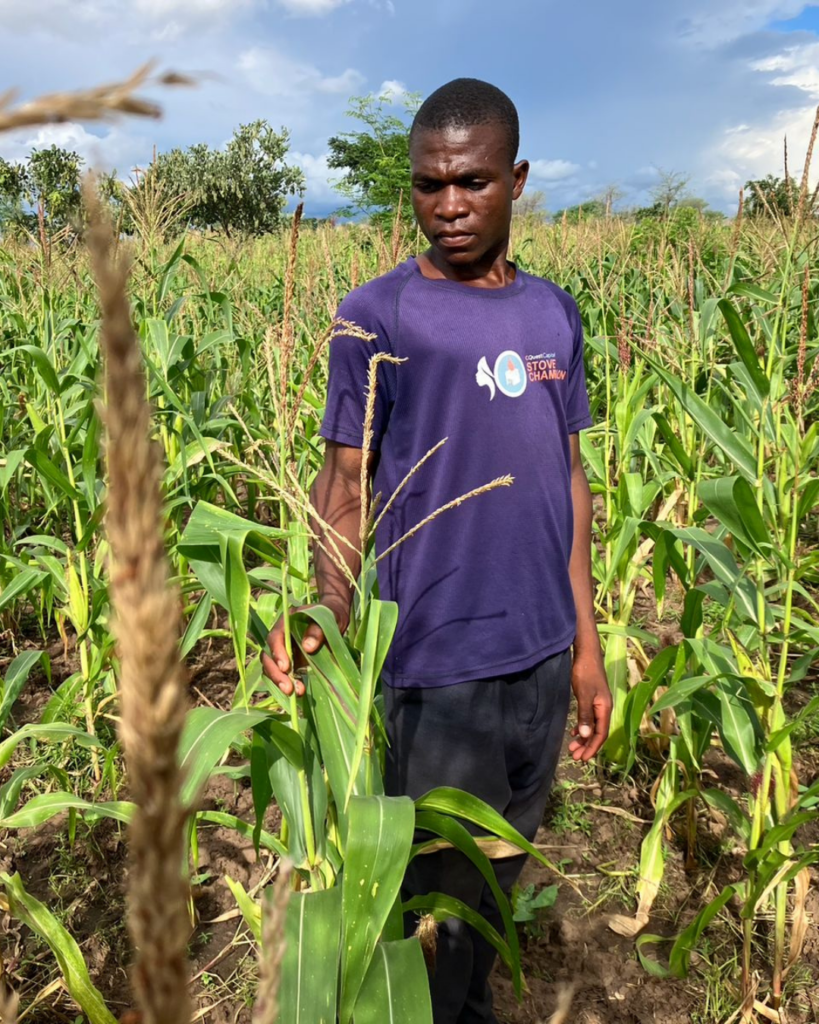
We stood there looking at Kathy’s maize field, feeling disappointed. Last year, she harvested five sacks of maize from it, thanks to our farming method. Now she’s not expecting more than two. “It was the drought,” she said.
We advised sowing late; for the past two years, that was the only sound advice. Farmers who sowed when the first rains came had to pull their maize out again, because the rain was always followed by a drought. But this year the rain started extremely early and persisted. The drought didn’t arrive until January, just when our late-sown maize was at its most vulnerable.
Still, Kathy says I needn’t worry that she’ll give this up. She’s seen last year’s harvest, and that was proof enough that this method can work. She’s accepting this year as a setback and will simply try again next year.
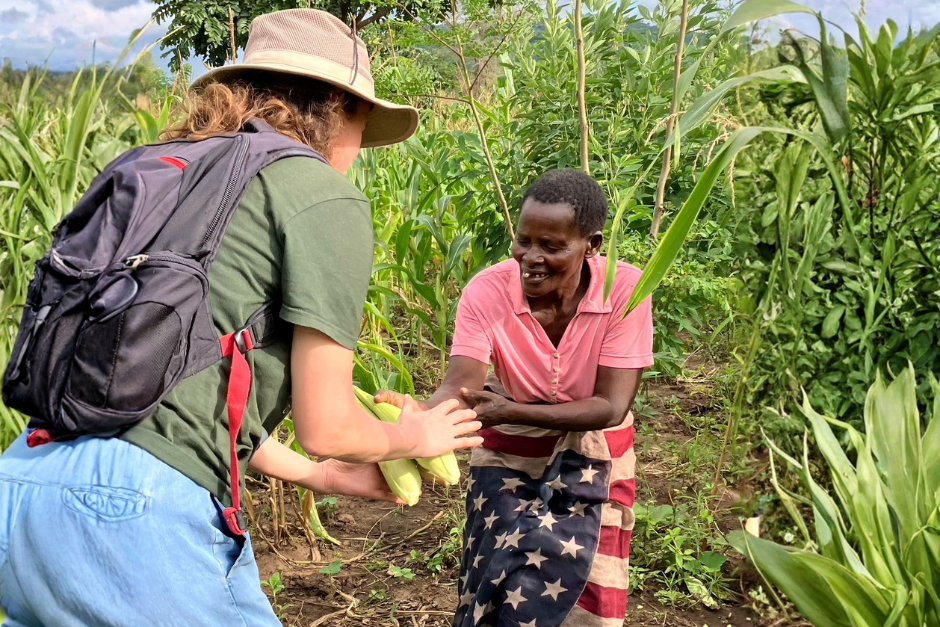
Just as we’re about to leave, she pops over to her other maize field, which she’s cultivated her own way: sown early and fed with fertiliser. It looks a lot better.
“Would you like some corn?” I hear her call out. I actually want to shout back, ‘No, of course not!’ ‘Go and eat it yourself!’ But I’ve been taught that you mustn’t turn down something like that. I feel anything but worthy of accepting that gift. What use has our advice been to her this year?
A ray of hope on the field
Fortunately, there are also farmers who are doing well or even better than last year. Esther, whom the trainer calls the best farmer in the village, welcomes us into her home. “I wish you could see my field,” she says, “but unfortunately, it’s very far away.”
That hopeful twinkle in her eyes stays with me. Should we go take a “quick” look after all?
After covering the first long stretch on the ATV, we still have a half-hour walk ahead of us on a narrow path through the cornfields. What a long way! And she does this every day. She carried the compost pile she’d made near her house, bit by bit, on her head, all the way to her field. Later, she also carried dozens of liters of water there to dilute the liquid fertilizer she’d learned to make herself. I’m already asking, “Are we almost there?” and that’s without any extra weight on my head.
A ray of hope on the pitch
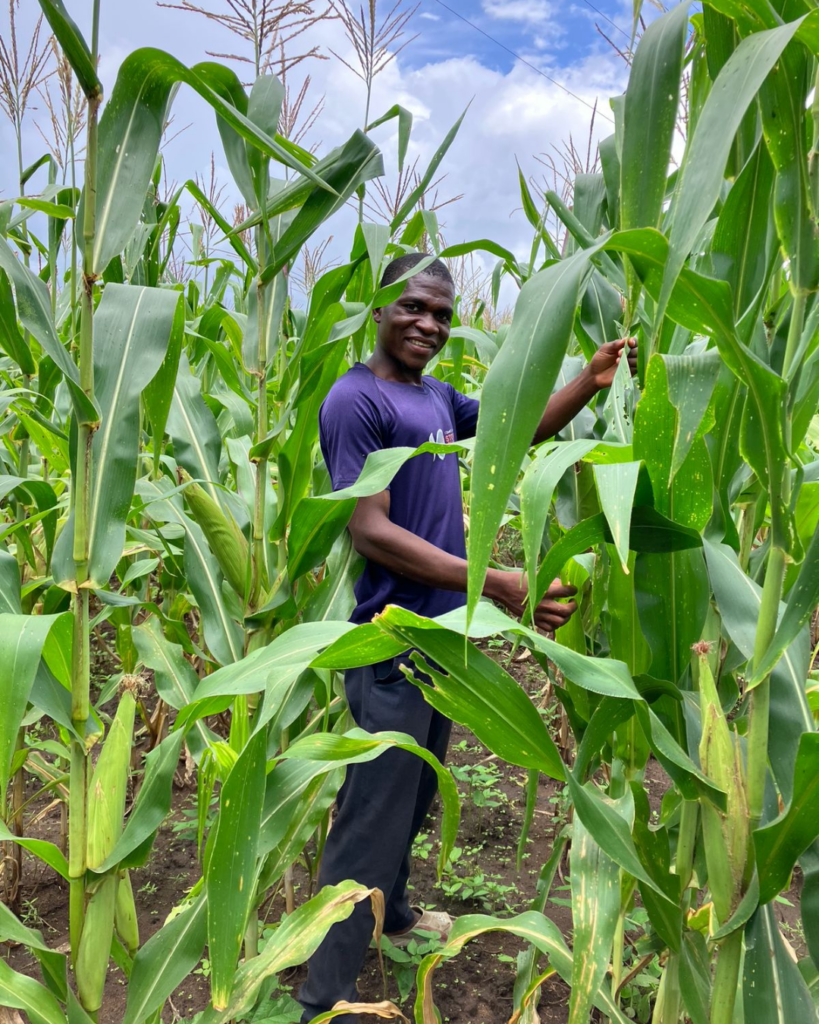
The walk is well worth it. Her maize looks absolutely splendid! It gives me courage: so it is possible, even this season. Esther explains that the main difference between her and other farmers is that she weeded her field completely before sowing the maize. Many farmers only started weeding once the maize had already come up, and that didn’t do the delicate maize plants any favours. I hear this again later from other successful farmers too. I’ll bear this advice in mind for next year. So we’ll need to pay closer attention to that.